
Intersting and thoughtful!!!
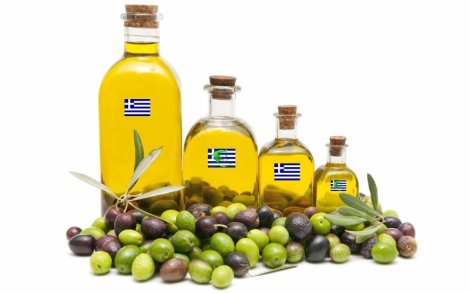
Long gone are the days when Greek oregano, olive oil and your favorite wine crossed the Atlantic in a suitcase.
Today, you can find just about any Greek product – from Nescafe to feta cheese – in countless Greek specialty stores, like Titan Foods (the largest of its kind), and in some of the most upscale grocery stores, like Dean & DeLuca (they even sell Krokos Kozanis – organic Greek saffron in filaments). Nowadays, you can also enjoy your favorite Greek wine at most restaurants. At Boulud Sud in New York, celebrity chef/owner Daniel Boulud has put not just one or two Greek bottles on the menu, but more than two dozen.
Greek olives have also found their way to some of the best gourmet shops in the world. At London’s Harvey Nichols, a one-stop shop in for the world’s most exclusive brands, you can find Greek olives. The olives have actually been harvested, by hand, from a small village on the Greek island of Evia exclusively for Harvey Nichols. But the world’s first luxury olive oil (and the most expensive) can be found just a few blocks away at Harrods, London’s most famous luxury department store. This is where you can pick up a bottle of Lambda – Greece’s award-winning olive oil that is bottled entirely by hand to ensure ultra-low acidity.
It’s a ‘miracle’
These are just a few examples of Greek products making their way to shops around the world. In fact, exports are increasing – despite the economic crisis. The president of the Greek International Business Association, Dimitris Lakasas, has called it a “miracle”.
Whatever it is, it’s a sign that Greek producers are starting to look abroad in hopes of offsetting the accelerated drop in domestic demand, which is mainly due to a sharp decrease in disposable household income as a result of high unemployment and steep cuts in wages and pensions.
Meanwhile, trade with the United States is growing. Last year, Americans consumed about $200 million worth of Greek cheese, processed fruit and vegetables, wine, olive oil and other food products imported from Greece, according to the Transatlantic Business Forum, which cites data compiled by the U.S. Census Bureau’s Foreign Trade Division.
In the United States, most imported Greek food products are consumed in the states of New York, New Jersey, Pennsylvania, where populous Greek American communities also reside, and secondarily in Chicago, Connecticut, Massachusetts and California, the same data shows.
|
U.S. imports from Greece between 2002 and 2011(in thousands of dollars) |
|||
| Product | 2002 | 2010 | 2011 |
| Dairy/eggs | 12,770 | 21,668 | 23,376 |
| Vegetables/preparations | 56,888 | 104,107 | 117,715 |
| Wine | 6,397 | 10,419 | 11,136 |
Source: US Department of Commerce
Overall, Greek exports grew by 37% in 2011 to 22.451 billion euros, from 16.392 billion euros in 2010, reflecting a widening export activity throughout developed markets, according to the GreekExporters.gr website hosted by European Plc., an international marketing and research company that brings importers and exporters from around the world together.
Olive oil, vegetable fat, preserved fruit and other packed food exports have recorded the most noteworthy increase, compared to 2010. Fruit and nuts, fish, conserved vegetables, dairy products and alcoholic beverages are some of the staple products which figure at the top of the list of Greek exports.
The United States, Canada and Germany and Italy are Greece’s top export destination countries, partially attributed to the existence of large Greek Diaspora communities there. The U.S. is in seventh place, followed by the United Kingdom.
Greek export figures for 2011 show that 15 new products, mainly from building materials, machinery-packaging, fertilizers, food and beverage were included in the top 100 most exporting Greek products last year. Also seven new markets were included in the list of Greek export destinations (Tongo, Argentina, Falkland Islands, Benin, Bangladesh, Peru and Santa Helena).
Cheese
More and more feta cheese, which is mandated by a European Union ruling to come exclusively from Greece, is being shipped to the United States these days. Feta exports to the U.S. showed a whopping 87.1% rise in the first half of 2012, compared to the same period last year, according to the English online edition of Kathimerini.
Exports of feta and four other soft cheeses, such as manouri and halloumi, to the U.S. in the January-to-June period amounted to an estimated $5.04 million, up from $2.69 million in the first half of last year.
According to data from the National Cheese Institute of the United States, the sales of feta cheese in the country’s major supermarket chains alone posted a 6.4% annual rise in 2011 from 2010, amounting to 7.89 million kilograms that were worth $171.7 million.
But the top-selling feta cheese in the American market is Athenos, which is also involved in the production of Greek-style yogurt and is a Kraft Foods subsidiary based in Wisconsin. It is followed by the Boar’s Head and Klondike Cheese of Monroe companies. The Greek-American companies involved in the production and sale of feta are Krinos, Fantis Foods, Kontos Foods, Altamira Foods and Boboris Imports, among others.
Nevertheless, overall imports of feta-type cheeses in the U.S. showed a 21% increase in the first half of the year, compared with 2011, approaching $30 million. In terms of quantity, the increase came to 19.7%, to 3.88 million kilograms.
Wine
In Greece, wine sales have plummeted 40%. Abroad, it’s a completely different story. Greek wine exports rose 7.5% in 2011. During the first three months of 2012, 7,395 tons (valued at more than $1 million) of Greek wine was exported – an incrase of 9.2% compared to the same period last year, according to the Hellenic Foreign Trade Board (HEPO), a non-profit public organization under the auspices of the finance ministry.
An estimated 13% of the wine exported flows straight into the United States. This is a 246% jump compared to previous years. Numerous marketing initiatives targeting the American market helped to promote Greek wine. And, for the first time in 22 years, several Greek wines were listed on the Wine & Spirits Top 50 list in 2011. They are Boutari, Gaia Estate, Skouras, Simi Winery and Domaine Spiropoulos.
But whereas Europe is the world leader in wine production – almost half of the world’s total vine-growing area and about 60% of production wine volume, official European Union data, shows Greece at the bottom of the list. Greece produced only 2,450 hectoliters last year of the total 150,924 hectoliters produced in all the 27-members of the EU, according to the data. France produced more than 50,000 hectoliters.
Olive oil
According to Invest in Greece SA, the official Investment Promotion Agency of Greece that is under the supervision of the development ministry, Greek olive and olive oil sector as a whole is dynamic and export-oriented and has a significant effect on Greece’s economy.
Greek olive oil production exceeds 300,000 tons annually and Greece is the third largest olive oil producer in the world. Per capita annual domestic consumption – at 16 kilograms – is the highest in the world. More than one third of all production – up to 135,000 tons (the volume of olive oil produced is dependent on the volume and quality olive of the year’s crop, which varies year to year) – is exported.
Primary markets for Greek olive oil are in the European Union and there has been a significant increase in recent years of exports to the United States, Canada, Australia and Japan, as marketing programs, brand awareness, and standardization have improved.
Greece enjoys 16% of the global market and more than 450,000 families in Greece depend on olive oil as a primary or secondary source of income.
But the presence of Greek brand-name olive oil on the international market is currently minimal, according to the Greek Association of Industries and Processors of Olive Oil (SEVITEL), which has long lobbied the state to create incentives for producers to start selling directly to consumers overseas.
Potential for future growth
Food and agriculture are two of five Greek industries consulting firm McKinsey & Co. highlights as having greatest potential for future growth. As previously reported in The Pappas Post, a 74-page report published by McKinsey earlier this year suggests that Greek businesses “need to be… more proactive in promoting Greek-branded products and services in core export markets”.
The new economic model McKinsey is proposing focuses on foreign markets, both for producing export goods and services and importing foreign capital.
McKinsey says Greece has “significant potential to increase its output, boost exports and contain imports” especially in olive oil. To do so, Greece has to aggressively campaign in foreign markets to build brand awareness and equity of Greek olive oil versus Italian and Spanish. It also has to substitute palm and sunflower oil imports with local olive oil.
And it’s not just the export of olive oil. Greek-branded feta cheese and yogurt, as well as fruit and vegetables are all potential money-making exports can easily get Greece through this economic downturn.
“The fact that Greece holds only a 28% share of the global ‘Greek feta’ cheese market and 30% of the US Greek-style yogurt market, further reinforce a clear commercial opportunity for Greece,” says McKinsey.
One only has to take a closer look at the Greek-style yogurt market in the United States to understand. The top-selling Greek-style yogurt in the U.S. is actually Chobani – a company launched by a Turkish immigrant.
Source: pappaspost.com
 business-travelblog.com
No it doesn’t solve the problem at all but it’s a good start!
There are other major problems like tax evasion,bribes, the vicious politicians!!
Μου αρέσει!Μου αρέσει!